
Explore! is a rigorous K–5 science program grounded in research-based pedagogy and contemporary science education best practices. The program engages students through phenomenon-based investigations and hands-on inquiry, developing scientific thinking through authentic exploration. Its integrated literacy approach simultaneously strengthens reading, writing, and communication skills. The program provides comprehensive teacher support, including multimedia resources and locally tailored materials, ensuring confident implementation across diverse classroom contexts.
Key Features
Integrated Literacy Skills: Reading and Writing Across Science
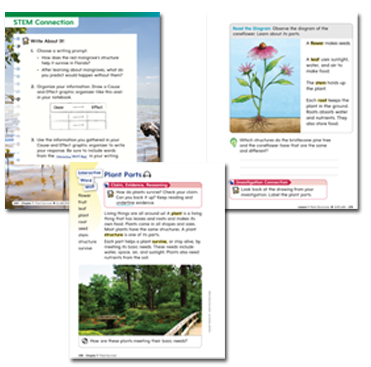
Explore uniquely integrates critical reading and writing strategies directly into the science lessons. Students learn how to effectively read and analyze complex scientific texts, interpret data tables and graphs, and construct coherent scientific explanations and arguments (CER – Claim, Evidence, Reasoning).
This dual-focus approach ensures students not only understand the scientific concepts but can also articulate their knowledge clearly and persuasively—a vital skill for advanced academic work and standardized testing.
Resources for Teaching Science In English
Recognizing the demands of English as a Medium of Instruction (EMI) environments in Korea, Explore provides dedicated language scaffolding resources. This includes clearly defined academic science vocabulary lists and test, practice book, worksheets, Explain It Video, etc.
These tools help teachers seamlessly integrate English language development with complex scientific content, allowing instructors to focus on the science concepts while ensuring students have the linguistic support needed to articulate their understanding in English.
Career Connections and Real-World Science Articles
The curriculum excels at connecting scientific concepts to real-world applications and future career opportunities. By showcasing how science is used in various global industries, Explore makes the content relevant and engaging, helping students understand the practical value of their studies and fostering a global mindset for future success.
Integrated STEM Approach and Hands-On Investigation
Explore is built on a strong STEM foundation, moving beyond simple memorization to cultivate critical thinking and problem-solving skills. The curriculum incorporates frequent, authentic inquiry-based labs and engineering design challenges (aligned with the 5E model – Engage, Explore, Explain, Elaborate, Evaluate), which are highly favored in modern education for developing a scientifically literate citizenry.
Integrated Literacy Skills: Reading and Writing Across Science
Explore uniquely integrates critical reading and writing strategies directly into the science lessons. Students learn how to effectively read and analyze complex scientific texts, interpret data tables and graphs, and construct coherent scientific explanations and arguments (CER – Claim, Evidence, Reasoning).
This dual-focus approach ensures students not only understand the scientific concepts but can also articulate their knowledge clearly and persuasively—a vital skill for advanced academic work and standardized testing.
Career Connections and Real-World Science Articles
The curriculum excels at connecting scientific concepts to real-world applications and future career opportunities. By showcasing how science is used in various global industries, Explore makes the content relevant and engaging, helping students understand the practical value of their studies and fostering a global mindset for future success.
Resources for Teaching Science In English
Recognizing the demands of English as a Medium of Instruction (EMI) environments in Korea, Explore provides dedicated language scaffolding resources. This includes clearly defined academic science vocabulary lists and test, practice book, worksheets, Explain It Video, etc.
These tools help teachers seamlessly integrate English language development with complex scientific content, allowing instructors to focus on the science concepts while ensuring students have the linguistic support needed to articulate their understanding in English.
Integrated STEM Approach and Hands-On Investigation
Explore is built on a strong STEM foundation, moving beyond simple memorization to cultivate critical thinking and problem-solving skills. The curriculum incorporates frequent, authentic inquiry-based labs and engineering design challenges (aligned with the 5E model – Engage, Explore, Explain, Elaborate, Evaluate), which are highly favored in modern education for developing a scientifically literate citizenry.
Programs
Grade K

Grade 1

Grade 2
Grade 3

Grade 4
Grade 5
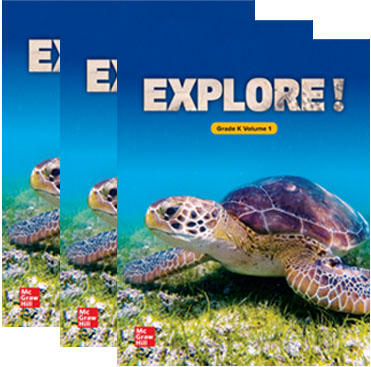
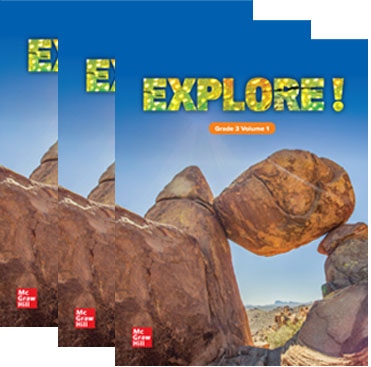
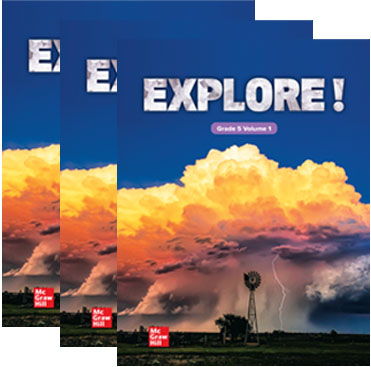
Grades K to 5: 3 Volumes per Grade (18 Books in Total)
Topics by Volume
- Volume 1: Physical Science
- Volume 2: Earth & Space Science
- Volume 3: Life Science
Online Resources
- Classroom PPT
- Vocabulary Test
- Vocabulary List
- Student Book Answer Keys
- MP Audio Files
- Practice Book
- Practice Book Answer Keys
- Assessments
Learning in Three Dimensions
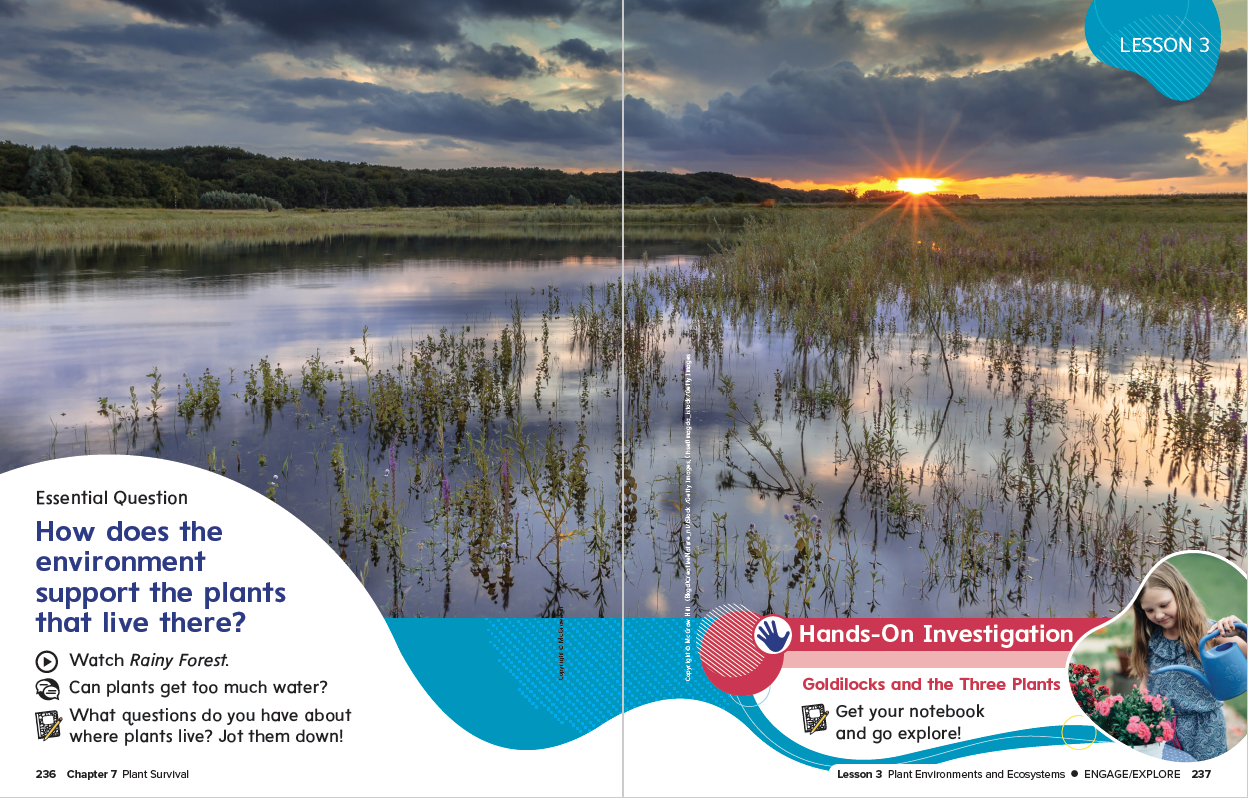
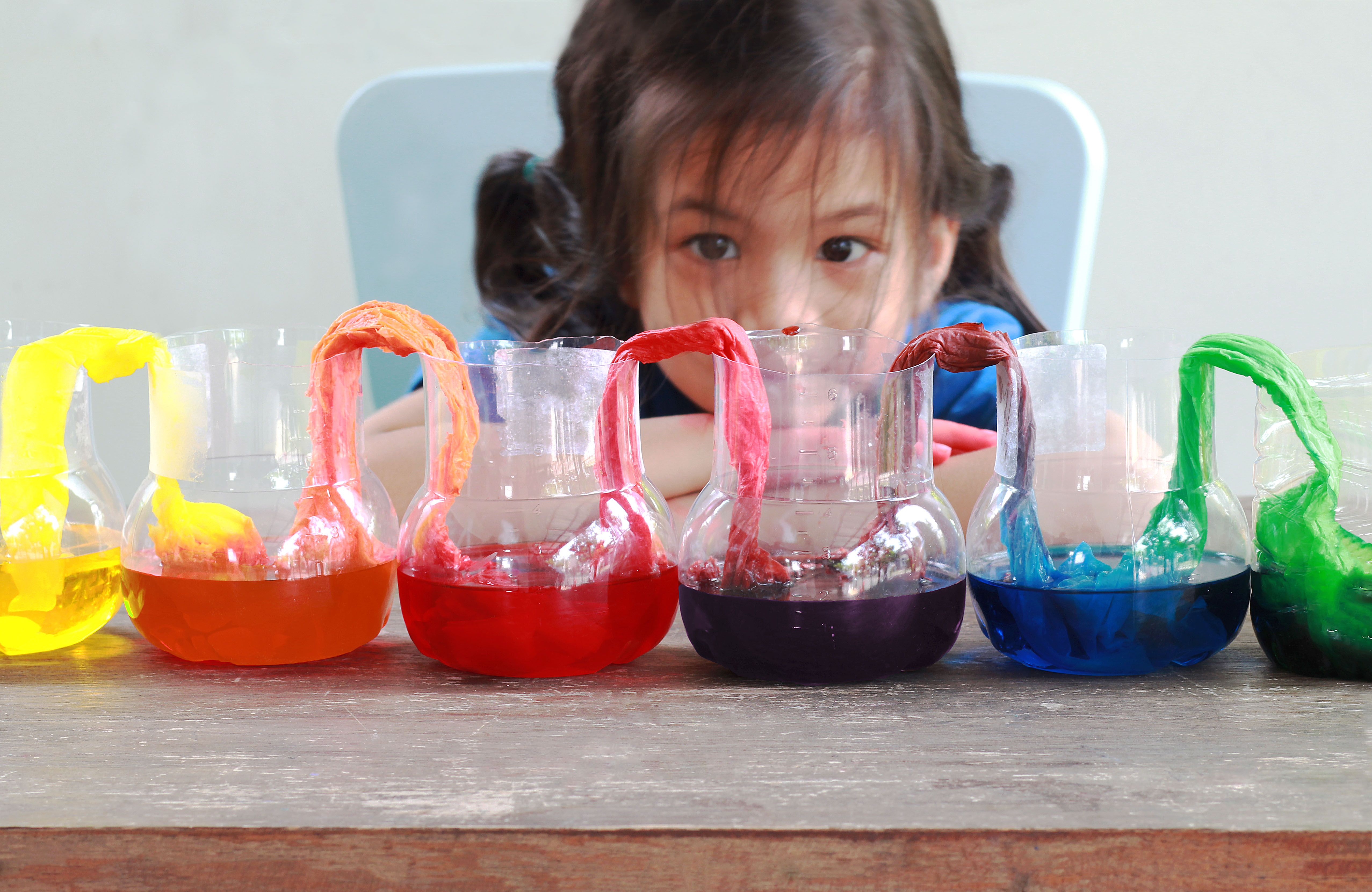
Explore! opens every lesson with an engaging phenomena-focused question, video, or image—piquing students’ curiosity and prompting them to ask questions. As the lesson progresses, students will accrue new knowledge that they can use to help explain the anchoring lesson phenomena.
Phenomena in Explore!
Disciplinary Core Ideas
Disciplinary Core Ideas (DCI) constitute the "Content" dimension of the framework.
The DCI represents the foundational scientific knowledge—such as Matter, Force, and Organisms—that students are required to learn at each grade level.
Scientific and Engineering Practices
Woven throughout every chapter and lesson, SEPs teach students how to investigate the natural world like real scientists and engineers. By learning how engineers design and build models and systems and how scientists use inquiry and experimentation to construct new theories, students gain insight into the real-world applications of the material.
By mastering the SEPs, students will be able to:
- Ask questions based on observations.
- Plan and conduct investigations.
- Use appropriate safety equipment and practices.
- Use appropriate scientific tools.
- Collect quantitative and qualitative data as evidence.
- Construct appropriate tables, graphs, maps, and charts.
- Develop and use models.
- Distinguish between scientific hypotheses, theories, and laws.
Recurring Themes and Concepts
Science is a complex and wide-ranging discipline. To achieve holistic understanding, students must be able to identify recurring themes and draw connections between overarching scientific concepts.
Piecing these connections together, students gain a more comprehensive view of the scientific discipline and how it connects to external fi elds of study, such as math or English language arts.
Recurring themes and concepts include:
- Patterns
- Cause and Effect
- Scale, Proportion, and Quantity
- Systems and Models
- Energy and Matter
- Structure and Function
- Change and Stability
Disciplinary Core Ideas
Disciplinary Core Ideas (DCI) constitute the "Content" dimension of the framework.
The DCI represents the foundational scientific knowledge—such as Matter, Force, and Organisms—that students are required to learn at each grade level.
Scientific and Engineering Practices
Woven throughout every chapter and lesson, SEPs teach students how to investigate the natural world like real scientists and engineers. By learning how engineers design and build models and systems and how scientists use inquiry and experimentation to construct new theories, students gain insight into the real-world applications of the material.
By mastering the SEPs, students will be able to:
Ask questions based on observations.
Plan and conduct investigations.
Use appropriate safety equipment and practices.
Use appropriate scientific tools.
Collect quantitative and qualitative data as evidence.
Construct appropriate tables, graphs, maps, and charts.
Develop and use models.
Distinguish between scientific hypotheses, theories, and laws.
Recurring Themes and Concepts
Science is a complex and wide-ranging discipline. To achieve holistic understanding, students must be able to identify recurring themes and draw connections between overarching scientific concepts.
Piecing these connections together, students gain a more comprehensive view of the scientific discipline and how it connects to external fi elds of study, such as math or English language arts.
Recurring themes and concepts include:
- Patterns
- Cause and Effect
- Scale, Proportion, and Quantity
- Systems and Models
- Energy and Matter
- Structure and Function
- Change and Stability
Hands-On Labs, Real-World Investigations
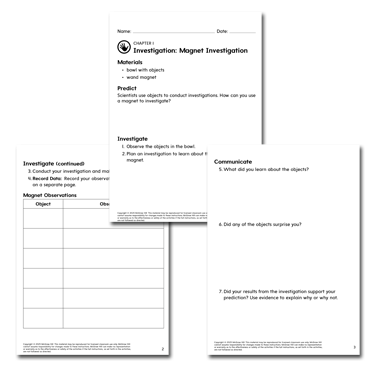
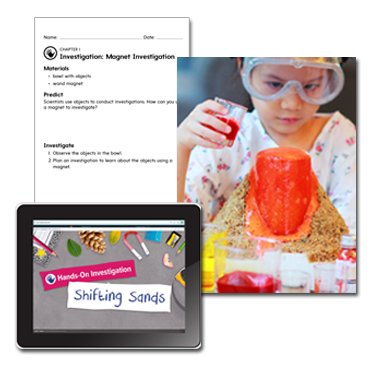
Real scientists get their hands dirty. By conducting hands-on investigations, students can apply their scientific knowledge to exciting real-world contexts. Accessible materials and engaging instructional videos prepare teachers and students alike to get the most out of each investigation.
- Claim, Evidence, Reasoning (CER) writing prompts help students make meaning from their investigation.
- Comprehensive instructional videos guide teachers on how to approach each science topic to maximize student comprehension.
- Anytime Investigation Videos provide student-friendly videos showing lab work in action.
- STEM Projects aligned to each strand of the multi-dimensional learning model allow students to bring their own creativity to design solutions for science and engineering challenges and investigate their world.
Whether jotting down lab notes or clicking through digital investigations, students have access to an array of rigorous hands-on activities through Explore!
- Hands-On Investigations immerse students in the real-world applications of science.
- Explore Simulations allow students to explore content beyond the limits of the classroom and as representations of real-world experiences.
- Ready-to-use notebook activity sheets allow students to record their investigations quickly and simply.
5E Model Instruction
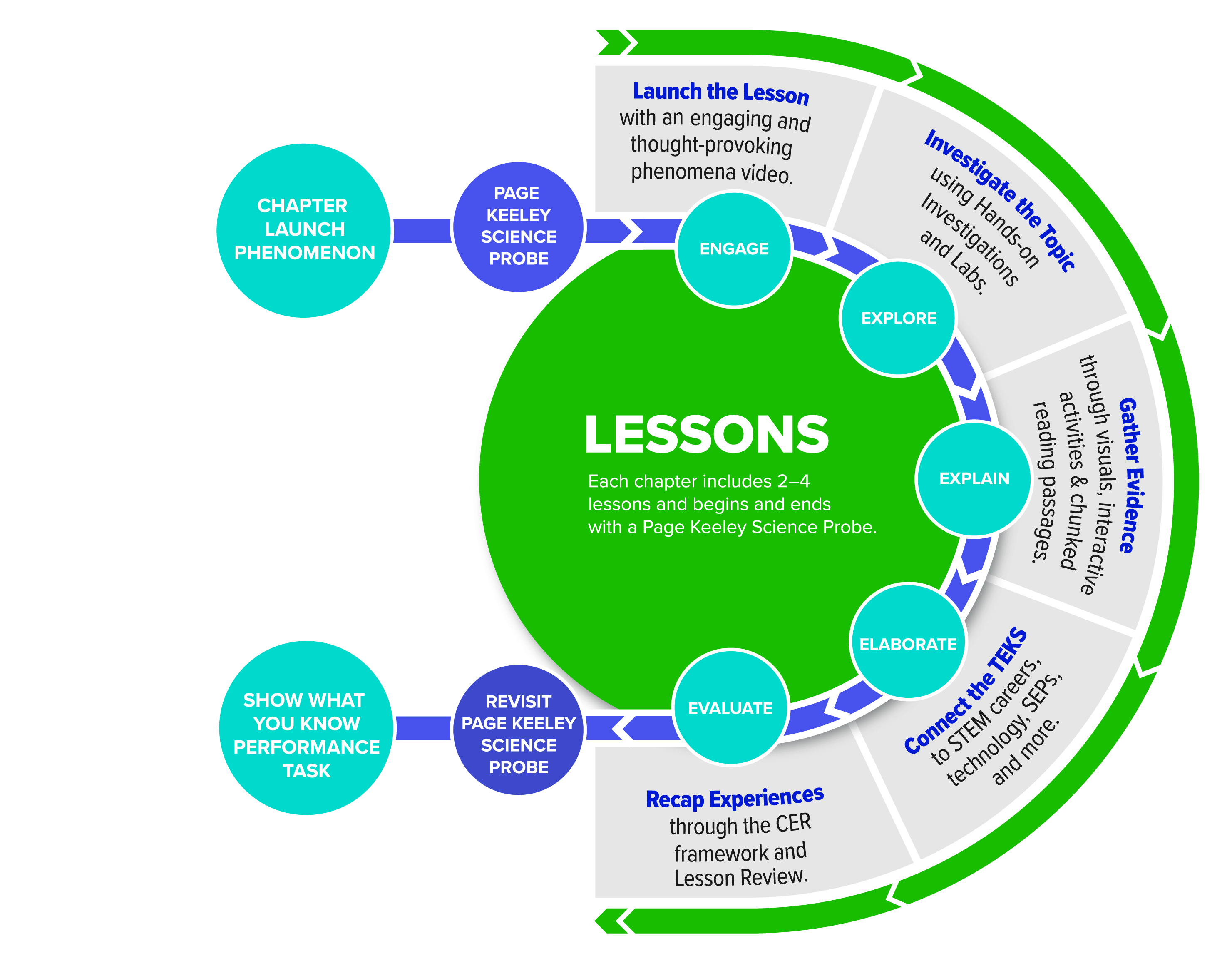
Additional Online Teacher Resources
Multimedia Videos
- Chapter Launch Video
- Engage Video
- Explain It Video
- STEM Connection Video
- Anytime Investigation Video
- MP3 Audio Files
Online Teacher Resources
- Classroom PPT
- Vocabulary Test
- Vocabulary List
- Printable Practice Book
- Practice Book Answer Keys
- Assessments
- On-Hand Investigation Worksheets
- STEM Project Worksheets
- STEM Project Teacher Support
Learning in Three Dimensions
Explore! opens every lesson with an engaging phenomena-focused question, video, or image—piquing students’ curiosity and prompting them to ask questions. As the lesson progresses, students will accrue new knowledge that they can use to help explain the anchoring lesson phenomena.
Phenomena in Explore!
Disciplinary Core Ideas
Disciplinary Core Ideas (DCI) constitute the "Content" dimension of the framework.
The DCI represents the foundational scientific knowledge—such as Matter, Force, and Organisms—that students are required to learn at each grade level.
Scientific and Engineering Practices
Woven throughout every chapter and lesson, SEPs teach students how to investigate the natural world like real scientists and engineers. By learning how engineers design and build models and systems and how scientists use inquiry and experimentation to construct new theories, students gain insight into the real-world applications of the material.
By mastering the SEPs, students will be able to:
Ask questions based on observations.
Plan and conduct investigations.
Use appropriate safety equipment and practices.
Use appropriate scientific tools.
Collect quantitative and qualitative data as evidence.
Construct appropriate tables, graphs, maps, and charts.
Develop and use models.
Distinguish between scientific hypotheses, theories, and laws.
Recurring Themes and Concepts
Science is a complex and wide-ranging discipline. To achieve holistic understanding, students must be able to identify recurring themes and draw connections between overarching scientific concepts.
Piecing these connections together, students gain a more comprehensive view of the scientific discipline and how it connects to external fi elds of study, such as math or English language arts.
Recurring themes and concepts include:
Patterns
Cause and Effect
Scale, Proportion, and Quantity
Systems and Models
Energy and Matter
Structure and Function
Change and Stability
Brochure
- Inspire Science Grade 6-8 Discipline Specific
 Built for NGSS
 Inquiry-Based Learning
 Phenomena-Driven Learning
 Project-Based Learning
 Hands-On Learning
 Three-Dimensional Learning
Brochure
- Inspire Science Grade 6-8 Discipline Specific
Request for Demo
Questions?
Get in Touch
If you're having trouble with any of our online platforms, need student or instructor resources, or are generally looking for more information on a product, we're here to help. Simply fill out this short form and one of our local representatives will be in touch with you within 24 hours.